Cultural Etiquette in Morocco: What Travelers Should Know
Traveling to Morocco offers a rich tapestry of experiences, from bustling souks to serene deserts. Understanding local customs and etiquette can enhance interactions and foster mutual respect. This article provides practical guidance on greetings, dress codes, dining customs, and respectful behavior, helping travelers navigate social situations with confidence.
Moroccan culture is deeply rooted in hospitality, community, and religious traditions. While Morocco is generally welcoming to visitors, awareness of local norms demonstrates respect and can lead to more meaningful connections. The following insights are intended to inform, not to prescribe, as individual experiences may vary based on region, context, and personal interactions.
Approaching cultural differences with an open mind and a willingness to learn is key. Small gestures of respect, such as using the right greeting or dressing modestly, can go a long way. This guide aims to provide a foundation for understanding, while encouraging travelers to observe and adapt as they go.
Greetings and Social Interactions
Greetings in Morocco are warm and often prolonged, reflecting the value placed on personal connection. A common greeting is “As-salamu alaykum” (peace be upon you), to which the response is “Wa alaykum as-salam” (and peace be upon you). Handshakes are common between men, and sometimes between men and women, but it is advisable to wait for a woman to extend her hand first. In more conservative settings, a man may place his hand over his heart instead of shaking a woman’s hand.
Physical contact between opposite genders is generally limited in public, though this varies. Friends of the same gender may greet each other with cheek kisses or hugs. When meeting someone for the first time, a polite handshake and a smile are appropriate. Using titles such as “Sidi” (Mr.) or “Lalla” (Mrs./Ms.) followed by the person’s name shows respect.
Conversation often includes inquiries about health, family, and work. These are polite expressions of interest, and it’s courteous to ask similar questions in return. However, discussions about politics, religion, or personal finances are best avoided unless the other party initiates them. Maintaining a respectful tone and avoiding direct criticism are important.
Dress Code and Modesty
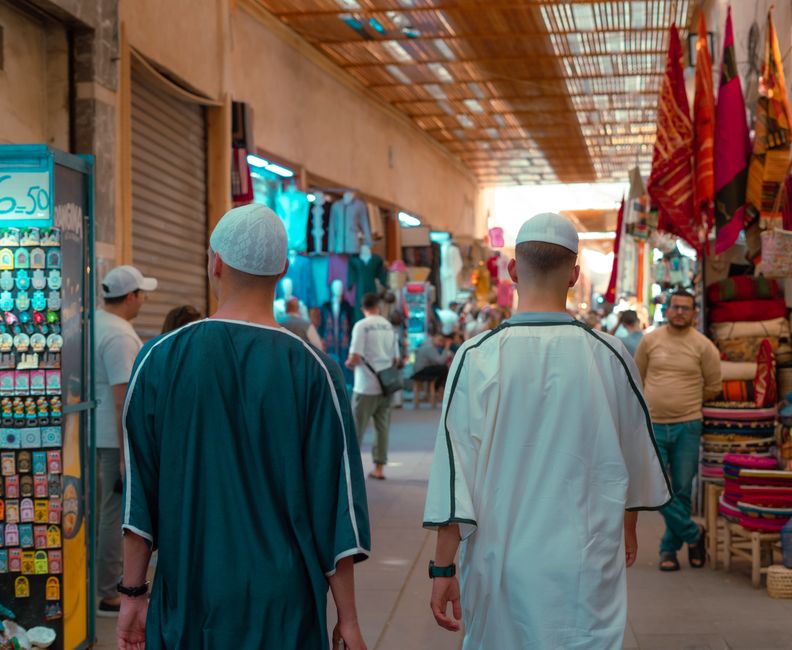
Dress in Morocco is a blend of modern and traditional styles, with modesty being a key consideration. While larger cities like Casablanca and Rabat may be more liberal, rural areas and religious sites often expect more conservative attire. For women, covering shoulders and knees is advisable, and a light scarf can be useful for visiting mosques or religious sites. Men should also avoid wearing shorts in conservative areas, opting for long trousers instead.
Beachwear is acceptable at pools and beaches but should not be worn in town or in medinas. Comfortable, loose-fitting clothing is practical for the climate and respectful of local norms. It’s also helpful to consider the setting: a business meeting or a visit to a government office may require more formal attire than a casual stroll.
When entering a home or a mosque, shoes are typically removed. It’s polite to follow the lead of your host or observe others. For mosque visits, non-Muslims are generally not permitted inside, but some, like the Hassan II Mosque in Casablanca, offer guided tours for visitors. In such cases, modest dress is required, and women may be asked to cover their hair.
Dining Customs and Hospitality
Moroccan hospitality is legendary, and sharing a meal is a central part of social life. If invited to a home, it’s customary to bring a small gift, such as pastries or fruit, but avoid alcohol unless you know your host’s preferences. Upon arrival, you may be offered tea or coffee; accepting is a sign of respect. Meals are often served family-style, with communal dishes eaten using the right hand. The left hand is considered unclean and should not be used for eating or passing dishes.
Before and after meals, a hand-washing ritual may be performed, sometimes with a pitcher and basin. It’s polite to wait for the host to begin eating before you start. Trying a bit of everything offered is a compliment to the cook. If you have dietary restrictions, it’s best to inform your host in advance, though in some cases, it may be more respectful to politely decline certain dishes rather than making special requests.
When dining out, tipping is customary, typically around 10% in restaurants. In more traditional establishments, a small tip for the server is appreciated. Alcohol is available in some restaurants and hotels, but it’s not part of traditional Moroccan culture, and public drunkenness is frowned upon. During Ramadan, eating, drinking, and smoking in public during daylight hours should be avoided out of respect for those fasting.
Respectful Behavior in Public Spaces
Public behavior in Morocco should reflect an awareness of local sensibilities. Displays of affection between couples are generally not common in public, though hand-holding might be seen in some urban areas. Loud or aggressive behavior, including raising one’s voice, is considered disrespectful. Patience and calmness are valued, especially in crowded markets or when negotiating.
Photography requires sensitivity. While many Moroccans are happy to be photographed, others, particularly women, may not appreciate it. Always ask for permission before taking someone’s picture, and respect a refusal. In some areas, photographing government buildings, military sites, or religious structures may be prohibited or require special permission.
When visiting markets, bargaining is expected, but it should be done with good humor and without aggression. Walking away is a common tactic, but it should be done politely. Also, be mindful of personal space, especially in crowded areas. When in doubt, observing local behavior and following suit is a safe approach.
Conclusion
Understanding and respecting cultural etiquette in Morocco can greatly enrich your travel experience. The guidelines provided here are not exhaustive, and customs can vary by region and individual. The key is to approach interactions with humility, openness, and a willingness to learn. For more travel insights, consider resources from Wanderlust Compass, which offers guidance on culturally sensitive travel.
Ultimately, the goal is to foster positive interactions and show respect for local traditions. By being mindful of greetings, dress, dining, and public behavior, travelers can navigate Morocco with confidence and contribute to a more harmonious exchange between visitors and hosts.